


Let me describe something to you.
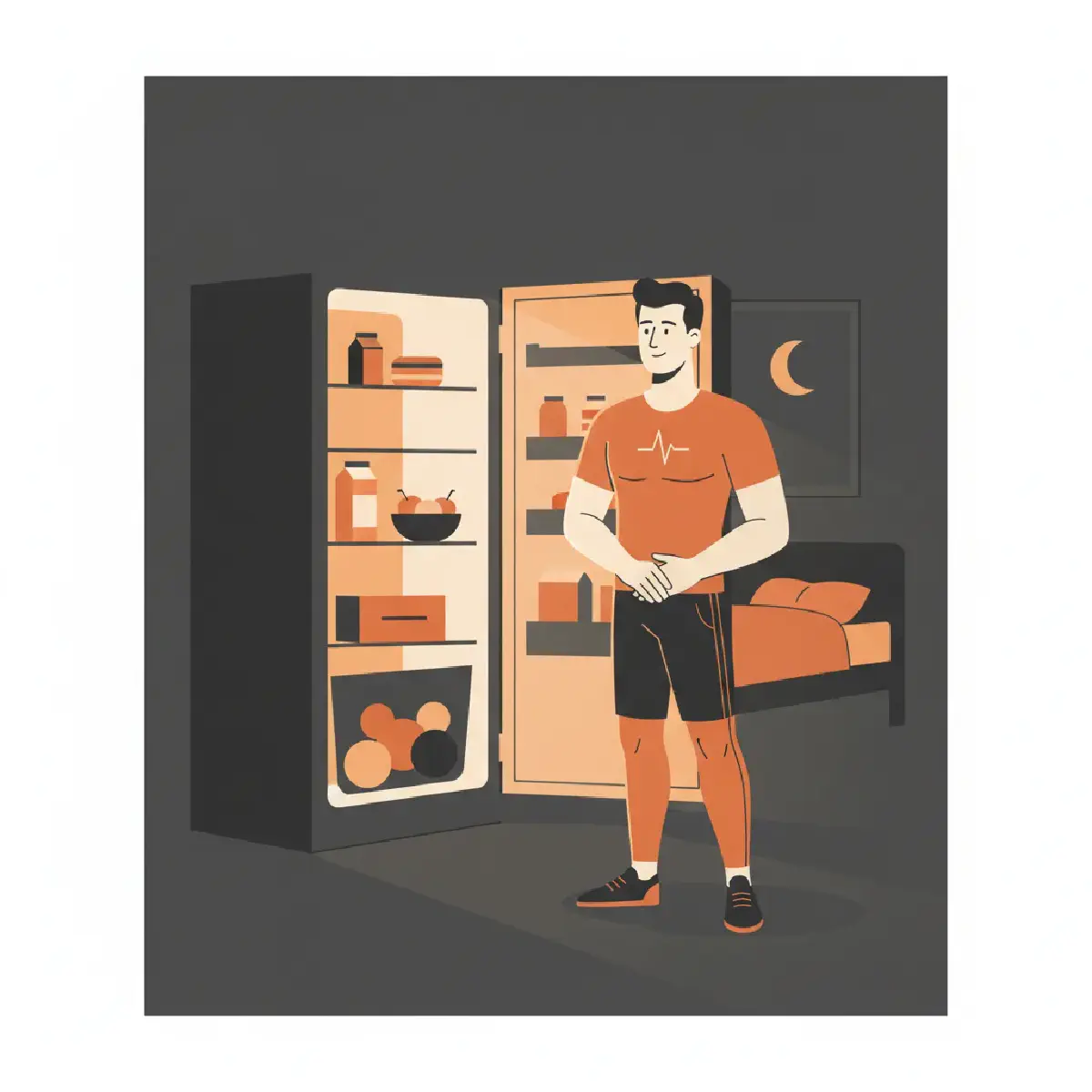
It’s a sensation in the upper part of your stomach. Not pain, exactly. More like a nagging presence. A hollow feeling with a little edge to it, somewhere between a mild cramp and your body clearing its throat at you. It comes and goes. It’s not pleasant. It’s not unbearable. It just… sits there, reminding you that you haven’t eaten in a while.
That’s hunger. That’s what it actually feels like. And if you’re trying to lose weight, you’re going to feel it.
My Probably Unhealthy Take on It #
I’ll be honest with you: when I feel that sensation, my first reaction isn’t dread. It’s something closer to satisfaction.
My brain goes, “Good. That means it’s working.” Like hunger is confirmation that I’m burning through something, that my body has run out of the easy stuff and is now shopping in the back of the pantry. I feel it and I think, “yeah, that’s the deficit doing its job.”
I fully understand that this is not the healthiest relationship with hunger. A therapist or a registered dietitian would probably have notes. The idea of treating physical hunger as a reward is at least a little complicated, and I’m not saying you should feel smug about being hungry or start glorifying it.
But I also don’t think that instinct is entirely wrong.
Here’s the Thing Nobody Tells You #
When you commit to a calorie deficit, actual hunger is part of the deal. This is not a bug. It’s not a sign that your plan is broken. It’s not your body going into starvation mode after skipping one afternoon snack. It’s just what happens when you eat less than you burn.
The problem is that most of us have spent our entire lives treating hunger as an emergency. You feel that sensation and the automatic response is to fix it immediately. Grab something, eat something, make it stop. We’re not used to sitting with it. We don’t even really know what it feels like because we’ve always resolved it within five minutes.
So the first time you’re actually trying to run a deficit and hunger shows up, it feels wrong. It feels like something you need to address right now. It feels like your body is sending a distress signal.
It isn’t.
What It Actually Is #
That nagging sensation high in your stomach is your digestive system doing its job and your brain noticing that the input queue is empty. It peaks, it fades, it comes back. It’s uncomfortable, not dangerous. Your body is not breaking down. You are not starving. You are just a person who hasn’t eaten in a few hours and has decided not to eat again for a few more.
For me, it tends to hit hardest in the late afternoon, around 4 or 5 PM, when lunch was a while ago and dinner is still a ways out. Sometimes it’s there when I wake up in the morning if I ate early the night before. It never sticks around for long. I have some water, I distract myself, and fifteen minutes later I’ve forgotten it was there.
The sensation isn’t asking you to fix it immediately. It’s just letting you know the tank isn’t full. That’s information, not an emergency.
What You Don’t Have to Do #
You don’t have to slam a pizza because you felt something in your stomach.
Seriously. That’s the whole point I’m building to. The sensation shows up, and the lizard brain goes, “eat something, fix this, what if we ordered wings,” and if you’re not prepared for that, you’ll do it. You’ll blow 2,000 calories chasing away a sensation that would have passed on its own in ten minutes.
Don’t eat just to make the feeling stop. Ask yourself if you’re actually hungry or just uncomfortable. Ask yourself if you’re on track with calories for the day. Drink some water. Give it fifteen minutes. The number of times hunger has actually been an emergency that required immediate cheesy breadsticks is zero.
But Don’t Starve Yourself Either #
There’s a version of this that goes too far, and I want to be clear I’m not describing that version.
If you’re genuinely hungry for hours at a time every day, your deficit is probably too aggressive. If you can’t focus at work or you’re light-headed or you’re dreaming about food constantly, that’s your body telling you something different. You need to eat. The goal is a moderate, sustainable deficit, not a war of attrition against your own metabolism.
The method I follow targets somewhere around a 400 to 600 calorie daily deficit. That’s a pace where you lose weight without making yourself miserable. Hunger shows up, sure. But it’s a background noise, not a roar. You can function. You can work out. You can live your life.
If your version of dieting feels like white-knuckling through every hour of every day, something is miscalibrated. Adjust the target. Add a snack. Eat more protein, which genuinely keeps you fuller longer and protects your muscle while you’re in a deficit. Add more fiber, which slows digestion and makes 1,800 calories actually feel like enough food. Those two macros are the single best change I made to manage hunger across the day, they’re the reason the deficit is survivable instead of brutal.
Prepare for It #
This is the actual advice I’d give anyone starting a calorie deficit for the first time: before you even begin, know that hunger is coming. Know what it feels like. Know that it’s normal, that it’s expected, that it’s temporary, and that you do not have to respond to it immediately every single time.
It won’t feel like this forever. Your body adjusts. Your appetite recalibrates. After seven weeks of this, my hunger is genuinely different than it was in week one. The sensation still shows up, but I recognize it now. I know what it is and I know it passes. It doesn’t feel like a threat anymore. It just feels like information.
You can get to that place too. But the first step is just knowing what’s coming so you’re not blindsided by it.
Feel the sensation. Acknowledge it. Have some water. Give it a few minutes.
And then keep going.
If you’re curious how drugs like Ozempic handle the hunger question at a neurological level, I wrote a three-part series about that too.